See where you stand.
Built from public data only. Nothing is estimated.
Four simple steps, and it costs you nothing.
That's all I need. Your email is just where the scorecard lands. Under a minute.
Your site, Google listing, ads, social and tracking. Public data only, nothing estimated.
Score out of 100, what's working, and your top three quick wins. Plain English. See an example
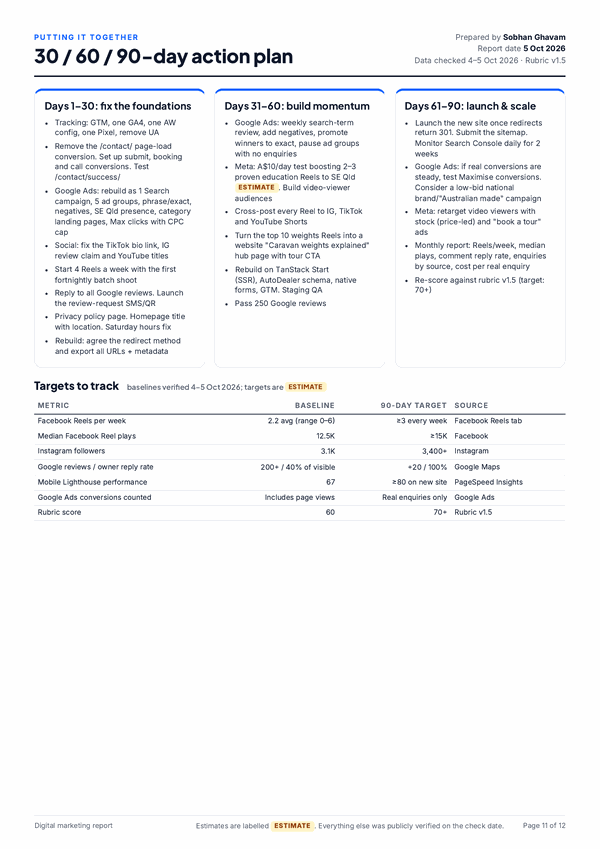
Book a 20-minute call and I'll walk you through a 12-page Growth Report: every check, what it's worth to fix, and a 90-day plan. Free, and it's the same document I quote from.
Every scorecard checks the same things, so you know exactly how your business measures up.
Does your site turn visitors into enquiries? Speed, clear offers and calls to action.
Can local customers find you on Google? Keywords, structure and technical health.
Your Google rating, review volume and whether your listings match everywhere.
Are your Google and Meta ads fresh, offer-led and consistent with your site?
Audience size, posting activity and how well your channels connect to your site.
Are your ads and leads actually being counted? The gap most businesses miss.
Two pages. Every number was checked on the date shown. Business details redacted for this sample.
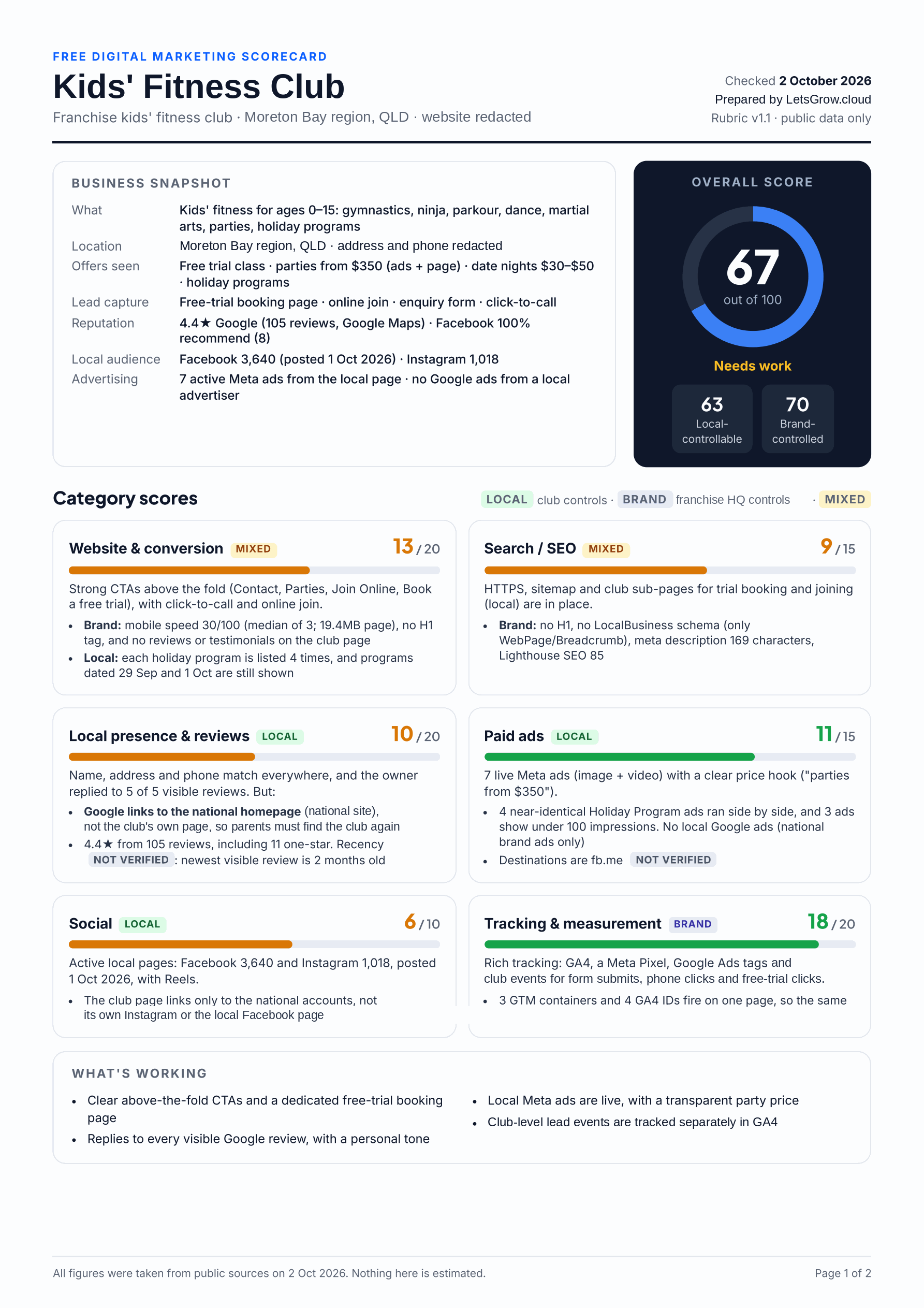
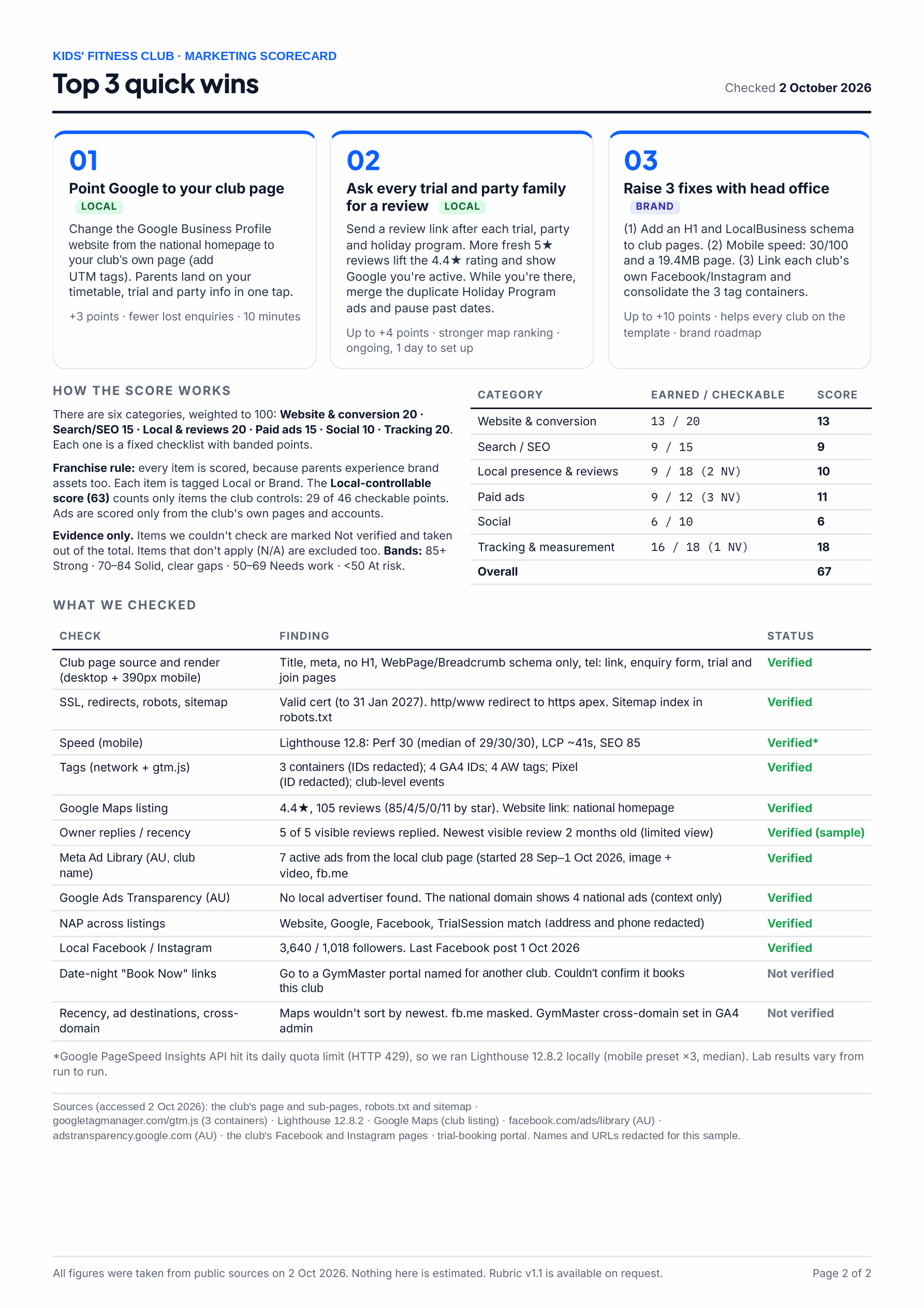
Most local businesses spend money on ads, websites and social media without knowing what's working. Your scorecard shows where you're likely missing out on customers, and what to fix first.
Every point comes from evidence I checked, and you get your top three quick wins with how long each one takes.
12 pages, built from public data. Estimates are labelled.
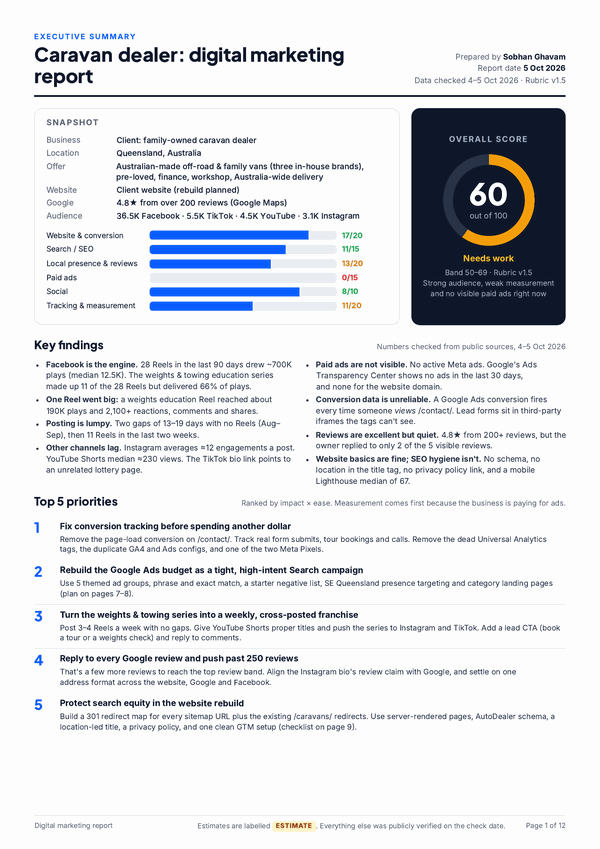
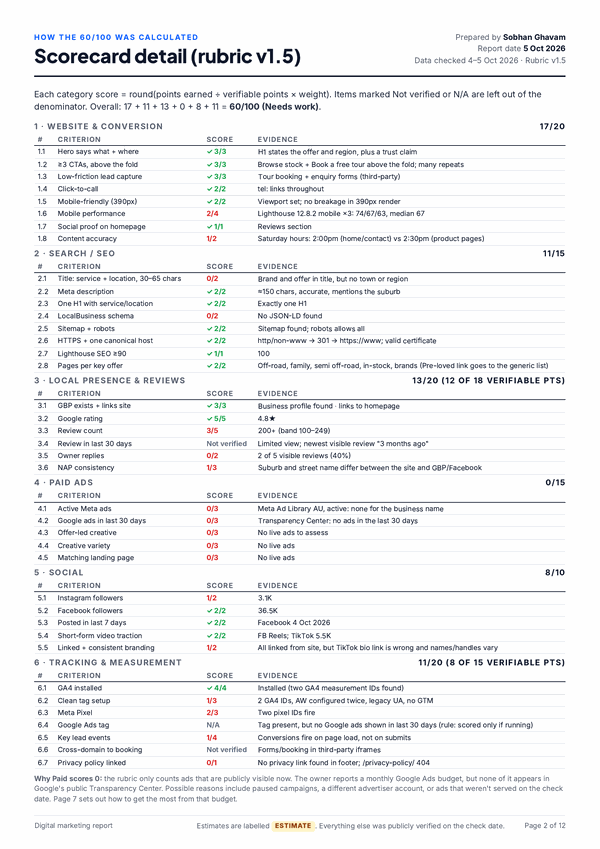
Every package is scoped from your Growth Report, so the quote is fixed before you pay.
Your single biggest leak
$500–900
$500 for a copy or listings fix · $900 for a tracking rebuild.
I fix the one issue your scorecard flags as the biggest gap.
Start with a free scoreTop 3 quick wins
$1,500
I work through the three quick wins listed on your scorecard.
Start with a free scoreAll failing modules + 3 months re-scoring
$3,000–4,500
Quoted from your scorecard.
I work on every area that's falling short, then re-score you over three months.
Start with a free scoreFirst results coming soon.
Prices in AUD. Final quote confirmed after your free scorecard.
Yes. There's no cost and no obligation to buy anything.
Six areas of how your business shows up online: Website & Conversion, Search (SEO), Local Presence & Reviews, Paid Ads, Social, and Tracking & Measurement. You get an overall score out of 100 and the things worth fixing first.
You'll get your scorecard by email in up to 2 business days.
Both are optional, but I need your website to score it and your email to send you the results.
No cold calls and no mailing list. If you want the full report or the gaps fixed, you book a 20-minute call with me.
I keep them securely and never sell or share them. You can read the full details in my Privacy Policy.
Your overall score out of 100, a score for each of the six areas, and your top three quick wins, with how long each one takes. Every point comes from public information I checked, like your website, Google listing, reviews, ads and social, so nothing is guessed. It's written in plain English, and it's yours to keep and act on, whether you fix things yourself or not. If you want the gaps fixed, I do that too, at a fixed price, after a short call.

Hi, I'm Sobhan Ghavam, the founder of Let's Grow, based in Brisbane.
I help local businesses get seen online and turn that attention into customers. My background is in data analysis, so I like to start with the numbers: what's working, what isn't, and what to fix first.
That's why I built the Business Growth Scorecard. It gives you a clear, honest picture of where your business stands across your website, search, reviews, ads, social and tracking, without the jargon.
Fill this in and I'll send your scorecard to your inbox.
 Let's
Let's